

About Us
Rooted in Theatre. Grounded in Practice.
We are a specialist education and training provider using the power of participatory drama to transform learning, build inclusion, and develop the next generation of young people and professionals.
Mission
Our Mission
"Our mission is to empower young people and families facing barriers to opportunity through participatory learning and community collaboration, while equipping professionals with the understanding and practical skills to support lasting positive change."
Participation
We believe learning happens through doing, not watching. Every programme we deliver puts participants at the centre — their voices, their experiences, their agency.
Inclusion
We design for the margins first. Our practice is neurodiversity-affirming, trauma-informed, and built to reach the young people most often left behind by conventional approaches.
Rigour
We combine creative methodology with evidence-based practice. Our work is grounded in research, evaluated honestly, and continuously refined.
Collaboration
We don't parachute in and leave. We co-design with settings, build capacity in teams, and stay accountable to the communities we serve.
Background
Our Story
Next Gen Skills Hub was founded by Lisa Brandreth, a practitioner with over a decade of experience working at the intersection of applied theatre, education, and social care. Lisa trained in Theatre of the Oppressed — the methodology developed by Brazilian theatre director Augusto Boal — and has spent her career bringing its transformative potential into schools, alternative provision settings, and professional development contexts.
The organisation grew from a simple observation: that the young people most in need of support were often the least well-served by conventional educational approaches. Lecture-style CPD wasn't changing practice. Passive learning wasn't reaching disengaged students. Something different was needed.
Theatre of the Oppressed offered a different way. By using drama to explore real social situations, rehearse different responses, and build empathy from the inside out, it creates conditions for genuine change — in individuals, in teams, and in organisations.
Today, Next Gen Skills Hub works with schools, multi-academy trusts, local authorities, alternative provision settings, and charitable organisations across Greater Manchester and beyond. Every programme is delivered in-house at your preferred location and co-designed with the setting, ensuring it is relevant, sustainable, and genuinely impactful.
We are proud to be a small, specialist organisation. We don't scale at the expense of quality. We work with the settings we can serve well, and we stay accountable to the young people at the heart of everything we do.

Lisa Brandreth
Founder & Lead Practitioner
Meet the Founder
Lisa Brandreth
Lisa has over ten years of experience as a practitioner, trainer, and facilitator working across education, social care, and the arts. She holds specialist training in Theatre of the Oppressed and has worked with young people and professionals in schools, pupil referral units, children's services, and community organisations. She is passionate about the transformative potential of participatory arts and committed to making that potential accessible to the settings and young people who need it most.
- Trained in Theatre of the Oppressed (Boal methodology)
- Specialist in SEND, SEMH, and neurodiversity-informed practice
- Experienced CPD facilitator for educators and professionals supporting young people and families
- DBS checked and fully insured
Approach
Our Methodology
Theatre of the Oppressed
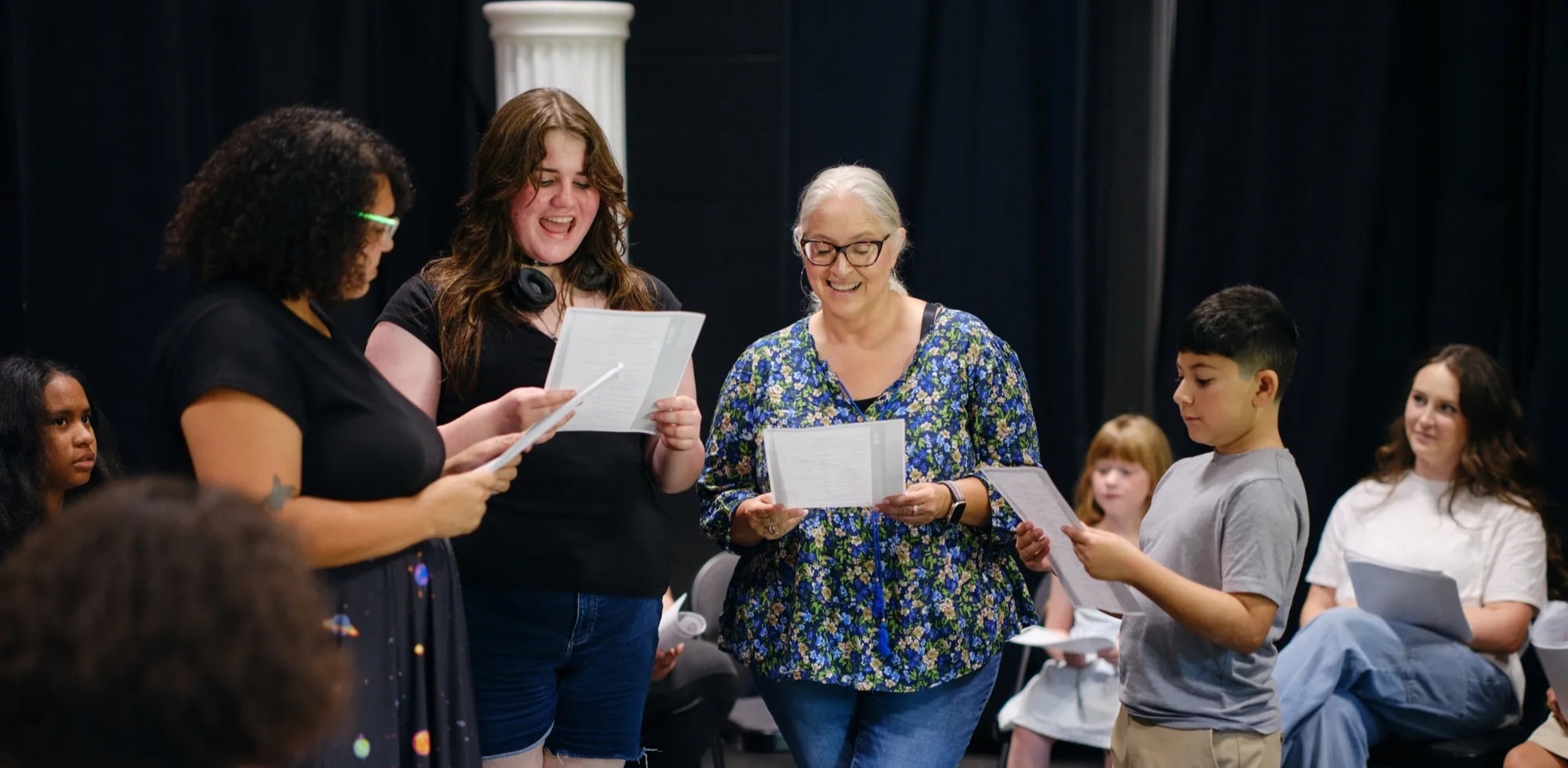
Developed by Augusto Boal in Brazil in the 1970s, Theatre of the Oppressed uses participatory drama to explore social dynamics, rehearse change, and build collective agency. Unlike conventional theatre, participants are not passive audience members — they are 'spect-actors' who can intervene in the drama, try out different responses, and rehearse the world they want to live in.
"The theatre is not revolutionary in itself, but it is surely a rehearsal for the revolution."
— Augusto Boal
Forum Theatre
A scene depicting a real social problem is performed, then replayed — with participants invited to stop the action, replace characters, and try out different responses.
Image Theatre
Participants use their bodies to create still images representing social situations, emotions, or power dynamics — making the invisible visible without words.
Legislative Theatre
Communities use theatre to develop and advocate for policy changes — turning lived experience into collective action.
Rainbow of Desire
An introspective technique that externalises internal conflicts and desires, helping participants understand the psychological dimensions of social oppression.
Work With Us
Whether you're a school, a local authority, or a charitable organisation, we'd love to explore what's possible together.